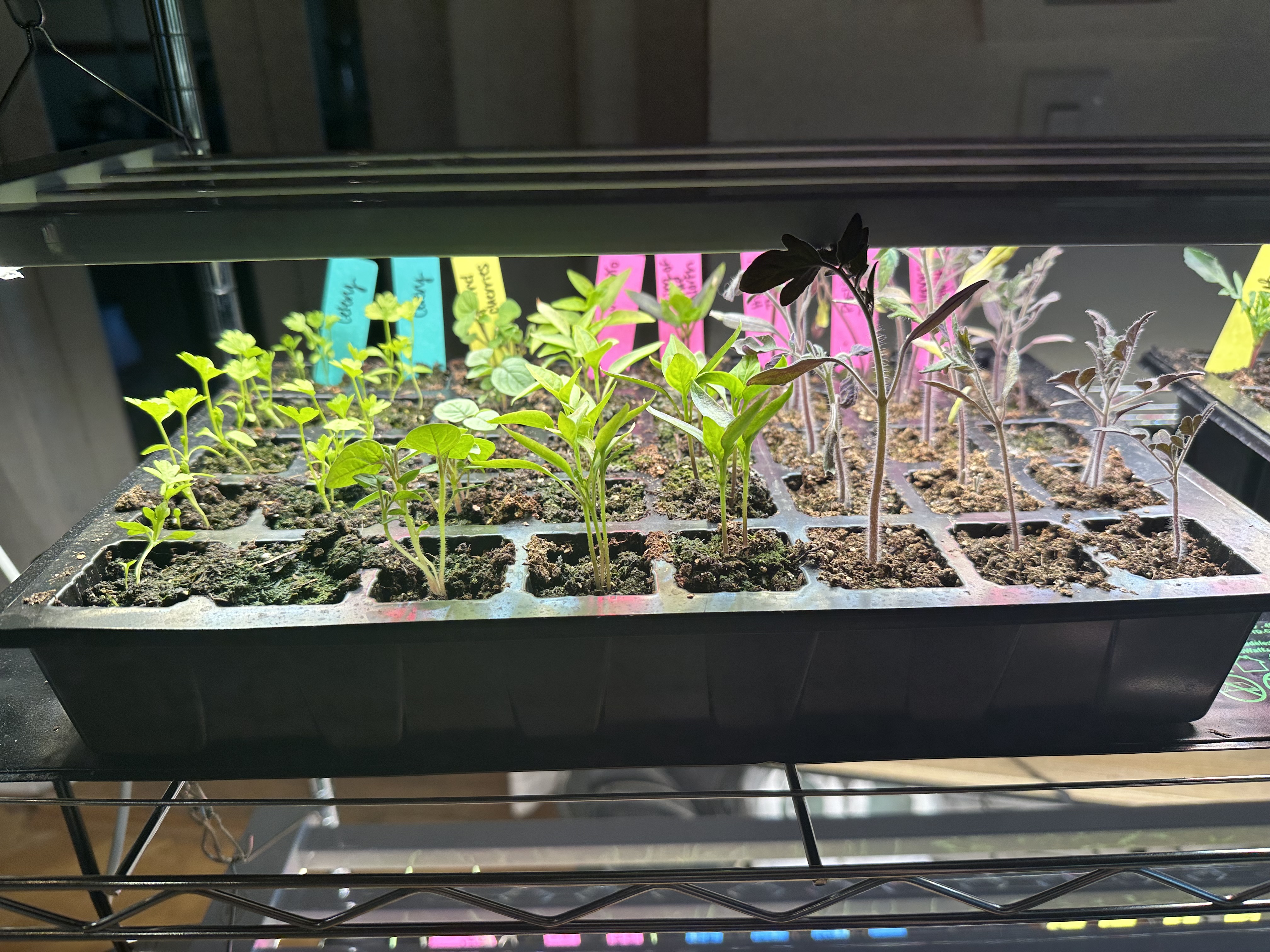
There is something deeply magical about starting vegetables from seed.
One day you’re sprinkling tiny little specks of hope into trays of dirt, and the next day there are baby plants reaching for the light.
It feels wholesome. Productive. Slightly feral in the best way.
Unfortunately, as it turns out, enthusiasm is not the same thing as experience.
My first real seed starting season included mold, overcrowding, rootbound tomatoes, and several moments where I stared at my seed trays wondering how things had gone sideways so quickly.
The good news? Every mistake taught me something useful. If you’re starting seeds for the first time—or if you’re currently staring at leggy tomatoes and mystery mold—this post is for you.
1. I Put Vegetables with Different Timelines in the Same Humidity Dome
In my mind, buying the largest seed trays possible and putting everything under one humidity dome was cost effective and an efficient use of my limited space.
In actuality, it was a complete mess.
Some seeds sprouted quickly and started growing fast, while others hadn’t even broken the soil surface yet. Before long, the fastest growers were pressing against the top of the dome while the slower seeds were still waiting to emerge.
I had to remove the dome earlier than I wanted, which likely made conditions less ideal for the seeds that still needed extra warmth and humidity.

What I’d Do Differently Next Time:
I’d group seeds with similar needs together.
For example:
- Fast germinators together
- Slower seeds together
- Warm-season vegetables together
- Cool-season crops separately
I’d also skip the oversized trays I used the first time.
For my second round of seed starting, I bought smaller trays so I could customize the setup more easily, and it made a huge difference.
2. I Loved Them Too Much and Overwatered Everything
I assumed seedlings needed daily watering.
So naturally, I watered daily.
I was not checking the soil. I was not observing moisture levels. I was simply showing up each day with a watering can and blind confidence.
Unfortunately, constantly wet soil = mold and mildew.
Nothing leads to frantic Googling quite like discovering fuzzy white (or green) growth when you’re absolutely certain you planted vegetables!
What I’d Do Differently Next Time:
Now I know seedlings need consistent moisture, not constantly soggy soil.
Next time I’ll:
- Check the soil daily before watering
- Water only when the top starts to dry slightly
- Use bottom watering when possible
- Increase airflow with a small fan
- Remove humidity domes after germination
Lesson: Sometimes doing less is more when it comes to gardening.
3. I Didn’t Plan for Potting Up
I underestimated how quickly some vegetables would grow.
My squash, cucumbers, and tomatoes absolutely took off.
Before I knew it:
- Roots were growing out of the drainage holes
- Cells were drying out constantly
- Plants looked large but were cramped
- Growth started slowing because they had no room left
They had clearly moved beyond starter tray living, and I was not prepared.
Looking back, the signs were obvious. The plants were drying out faster every day and putting more energy into surviving than growing.
What I’d Do Differently Next Time:
I’d prepare for potting up before I start seeds.
- I’d start seeds in larger cells to begin with to give myself more time before I need to transplant
- I’d have larger containers and extra soil ready, so I don’t have to make multiple last-minute trips to the hardware store
- And I’d save some space under my grow lights, so I don’t have to smush everything together haphazardly

4. I Planted Two Seeds Per Cell and Created Extra Work for Myself
You’ll often hear that you should plant two seeds per cell to improve germination.
And that advice is solid.
The issue was… my seeds germinated really well.
So instead of sparse trays, I had little pairs of seedlings everywhere, and then came the dreaded culling process.
I know culling seedlings is a normal part of gardening, but I don’t enjoy deciding which of my little cucumber seedling get to stay and which ones don’t.
I tried separating seedlings to save as many as possible, which can work—but it also created far more hassle than simply planting one seed per cell would have.
What I’d Do Differently Next Time:
For seeds with good germination rates, I’d plant one seed per cell and trust the process.
Yes, I may end up with a few empty spots, but I’d also save time, reduce transplant stress, and avoid turning seed starting into a moral dilemma.
That being said, for older seeds or varieties I’m unsure about, I’d still double sow.
What This Seed Starting Season Taught Me
Seed starting is not about perfection.
Most mistakes come from excitement more than neglect. I wanted to do everything right, so I overdid some things and under planned others.
The funny thing is that none of these mistakes ruined my garden. They just taught me what I’ll do differently next year.
Sometimes gardening looks like:
- Mold on the soil
- Tomatoes growing too fast
- Trays drying out overnight
- And a little (… or a lot) of frantic googling
And honestly? That still counts.
Every season teaches you something, even the messy ones.
If You’re New to Seed Starting
Please know this:
You do not need the perfect setup.
You do not need expensive tools.
You do not need to get everything right the first time.
Sometimes success looks like a few healthy seedlings and several valuable mistakes.
That is still a win.
Final Thoughts
If your seedlings are leggy, crowded, moldy, rootbound, or thriving entirely out of spite—you’re in good company.
Gardening isn’t about getting everything right the first time. It’s about learning, adjusting, and trying again next season with a little more knowledge than you had before.
I’ll do better next season.
The plants will still judge me.
And I’ll probably still plant too many tomatoes.
If you want to read about my initial seed starting excitement for a pick me up check out this article: https://thread-trowel-thimble.com/2026/03/11/the-magic-of-the-first-seedlings/

Leave a Reply